

Groups of mutual assistance (self-help) are understood to be groups of people who voluntarily spontaneously arise or are organized with the help of specialists, united by the similarity of the problems experienced and crisis life circumstances, to jointly solve these problems and provide mutual assistance and support. The difference between mutual aid groups and public organizations consists in their non–formality, less structuring, lack of desire for socio-political and commercial activities (focus on intra-group interaction, and not on interaction with other organizations or associations). A large number of such groups are known in social practice, for example: groups of alcoholics anonymous, groups of anonymous drug addicts, groups of veterans of Afghanistan (Vietnam in the USA), women’s groups, groups of AIDS patients; groups of single mothers or fathers, parents of disabled children, groups of parents and friends of mentally ill, etc.
Mutual aid groups can be subdivided for various reasons, for example:
- groups that arise spontaneously and groups initiated by specialists;
- groups with a functioning program and a clearly defined goal, and groups with spontaneous dynamics;
- closed-type groups, when the membership is constant, and open-type groups, when it is allowed to change the composition and accept new members;
- groups that work for a certain time, meet regularly, and groups that gather only for some reason;
- thematic groups that unite those who have experienced similar traumatic experiences (groups of victims of violence, etc.), and mixed;
- groups that differentiate depending on the composition of participants, uniting people on some formal basis (by gender, age, etc.), and mixed groups, etc.
As a rule, the main targets of mutual assistance groups are:
- reacting and discussing past traumatic experiences, as well as possibly the future;
- minimizing negative self-perception (“It didn’t just happen to me”);
- development of means to overcome crisis situations (both psychological and organizational);
- formation of group cohesion;
- preservation of social (cultural, national) identity;
- providing comprehensive socio–psychological support, including instrumental (material), emotional – psychological and value –semantic.
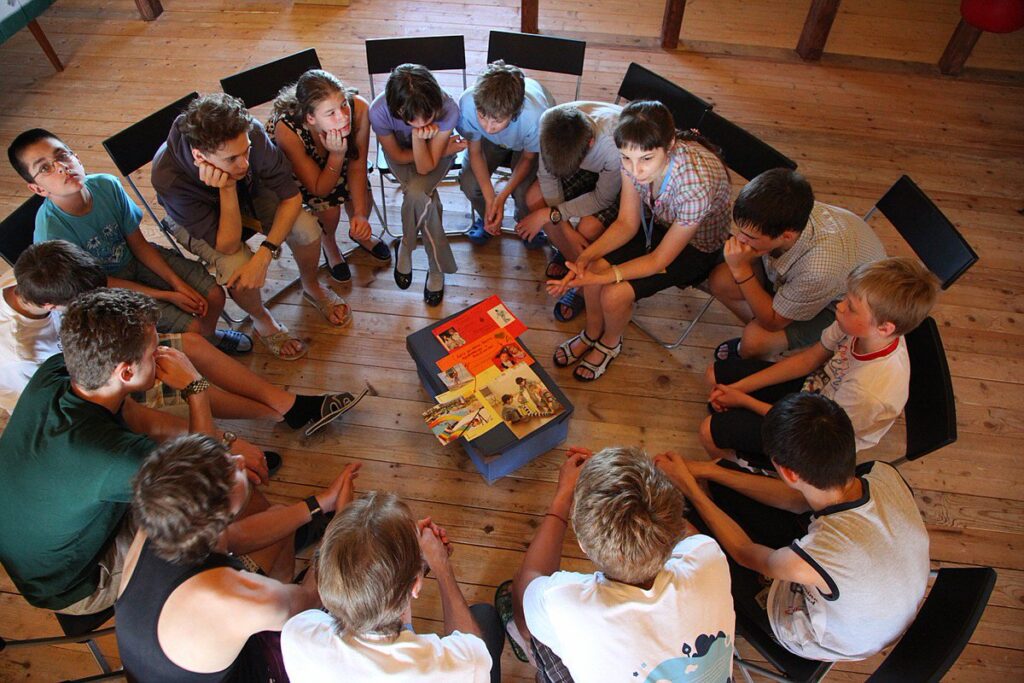
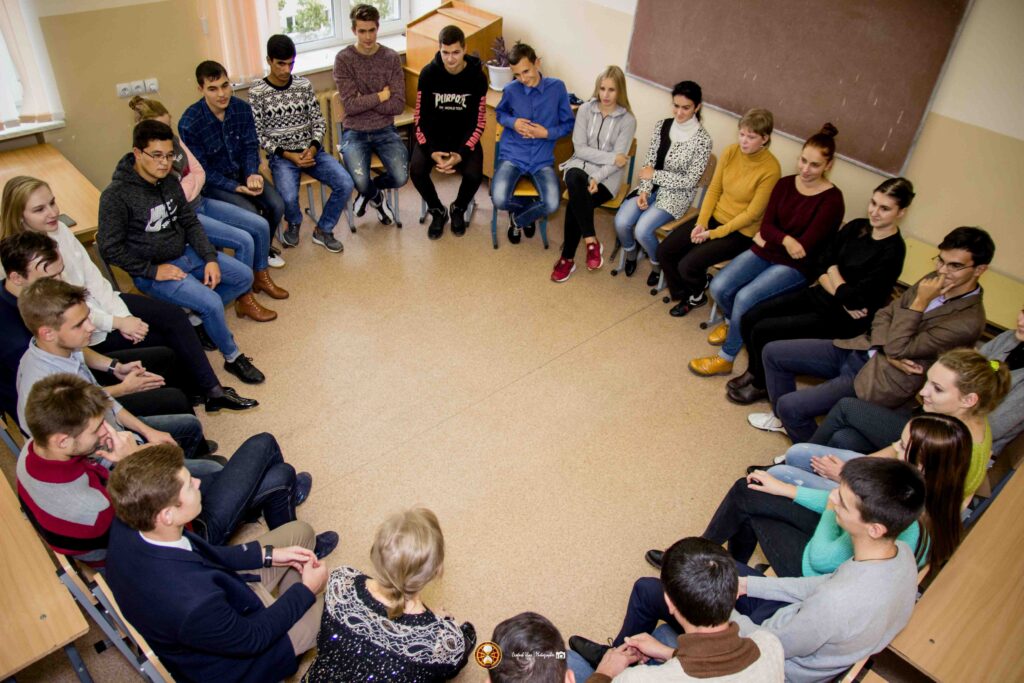
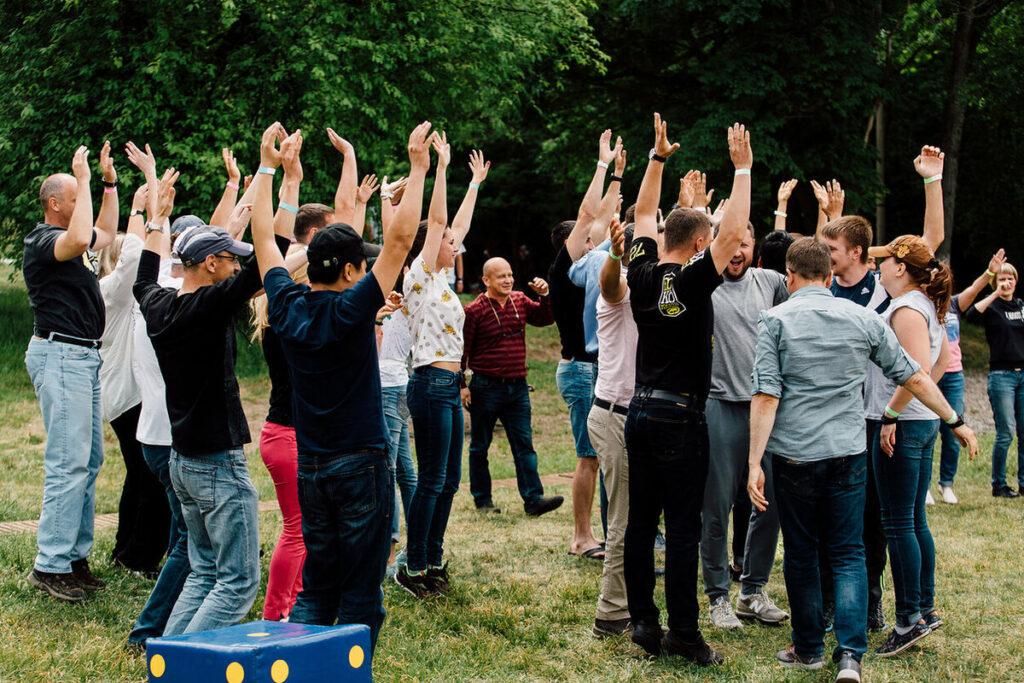
There are two possible ways to form (create) a mutual assistance group. The first, direct one is an offer to organize meetings. The second, indirect, is an invitation to a meeting or a meeting with some interesting or useful interlocutor, i.e. creating a situation favorable for informal acquaintance, communication, information exchange, etc. A completely different principle is also possible – the identification of already existing informal communication circles that perform the functions of support and mutual assistance. In this case, the organizational functions of social protection services may consist only in clarifying the problems and requests of this group and providing it with social assistance.
- The next step to create a group is to find a leader – leader. Its functions usually include the organization of a group gathering place, a room that promotes the emergence of group cohesion; constant active involvement of group members and their family members in work, joint overcoming of urgent problems, discussion of individual experience, leisure activities; organization of effective communication for the period of group gathering; provision of emergency individual psychological assistance, if necessary, willingness to listen and to understand any member of the group; assistance in finding information on vital issues; assistance in establishing direct ties between group members; creating a warm friendly atmosphere during the gathering of group members; if desired, ordinary members of the group jointly develop the rules of the group, rules of admission, common rituals, etc.; mediation in solving social, legal, financial, medical and psychological problems.
If the group was initiated by specialists (social pedagogue, psychologist, social work specialist), the leader of the group organizes acquaintance of unfamiliar members of the group with each other and with the case; discussion of the composition of the group (if the group is planned to be open, it is possible to develop rules or a reception ritual); the group is informed about the need for requirements for in group work, their own rules of work are developed; sanctions are developed for deviation from group rules; the main goals of the group are determined both at the level of real problems and at the psychological level.





Grupa Grace
Learn WordPress with Grupa Grace
Proudly powered by WordPress